Showing posts with label Books. Show all posts

Saturday, 19 September 2015

Reading all the next big sci-fi blockbusters before they happen

This year, as a semi-serious and quasi-redundant law student, I have been devouring a respectable number of novels to appease my growing science-fiction appetite. If you have read some of my previous posts, you may have realised that I am a pretty serious cyberpunk fan. And that I watch a shit tonne of movies.

Anyhow, so I've realised that most of the novels I've read this past year will all be turned into movies very soon. So since it's Saturday and my deadline for my freelance articles are due tomorrow, I thought - NO BETTER WAY TO PROCRASTINATE THEN TO SPEND 3 HOURS WRITING SHIT THAT ISN'T ACTUALLY DUE.
Truly orgasmic cyberpunk scenery

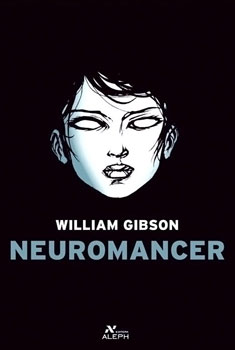
NEUROMANCER by William Gibson (1984)

For the last few years, I've been trying to get more into the world of cyberpunk and sci-fi literature. I've attempted to read William Gibson's 1984 novel Neuromancer, which is the biblical work of the cyberpunk genre, but because I only have soft copies of it on my laptop and iPhone, I've been finding it really hard to actually... you know, physically read it. Moreover, jesus christ, I know Gibson is like the forefather of cyberpunk but, and it pains me to say this, his writing style is spasmodic as fuck. I just. Can't. Follow it. 

A sojourn into online forums of the genre reveal that I'm actually far from the only one who has this opinion about Gibson's writing. A lot of other cyberpunk fans also have trouble with the way Gibson paints a whole new world at the speed of light. Every second sentence features a new technology or object that is never ever explained - it's a part of this new exciting universe that's simply thrown at you. But yeah, it gets confusing and by the third chapter, you've got a migraine. 

Nonetheless, Neuromancer is universally considered as one of the origins of cyberpunk and a massive inspiration for a lot of subsequent movies and novels (e.g. The Wind-up Girl by Paolo Bacigalupi; anime series Cowboy Bebop). I vow to finish reading it no matter what. 

Plus, Hollywood is apparently in talks to develop a movie for Neuromancer, which is exciting, especially visually. 

But then Hollywood also wants to develop live action movies for Ghost in the Shell and AKIRA...
lel which means I'm holding my breath until they cast someone who is actually fucking Asian, and not a joke like this one:

Jackson Rathbone as an Asian robot in The Last Airbender.


READY PLAYER ONE by Ernest Cline (2011)


Ha.

Hahahaha.

Hahahahahahahahhaahahaha.


Do not even talk to me about this bound-volume of what is essentially toilet paper.

If you want my final thoughts on it, you can find my full page review in E-Magazine, which I will not link here as I am paranoid about employers tracing into my blog. But you CAN pick up a copy at a local restaurant, cafe or library. Especially in Box Hill.  Or, ask me in person because I will not be able to refrain from verbally ranting about its endless tropes and cliches, and...

The worst fucking cliche any YA sci-fi/dystopian novel can ever ever ever ever ever spew onto your screen or page is the sassy, 'alternative girl' with the cool multi-coloured/streaked hair, possibly with freckles, but definitely also sporting black nail polish and chewing bubble gum or some shit like that. She'll be witty, quirky, and just as good at video-games/boy stuff as YOU are (the male first person narrator) . Most importantly, she is the perfect balance between cute and hot. That last bit could seriously be a line from the novel. 

NO. 

Anyway, Ready Player One is definitely going to become a movie. I mean of course it is, the whole book is based in virtual reality - perfect movie material. they got Steven Spielberg to direct and it is scheduled to come out in December 2017. They're currently casting. 


WOOL by Hugh Howey (2011)

Mediocre.

Wool is the first in its series about people who live in silos and think that their silo is the only part of human civilisation still alive in a world where the air outside is fatally toxic. However, curious minds begin to wonder, and soon, a woman discovers that the people who live in these silos have been blinded from the truth by a weave of lies from upper management... Then you play John Butler's Revolution on speaker and start tap-dancing with a bloodied pitchfork. 

Yes, it's one of those novels. The dystopian-sedition thing is extremely trendy these days, following the success of The Hunger Games, Insurgent, The Maze Runner, and to a lesser extent, The Giver

Wool at its most basic principles is just like The Hunger Games, and also includes a little romance in its plot devices. But it has flowery language (maybe more enjoyable for people who don't particularly like straight-cut YA-style writing), and most importantly, no stupid love triangles/sexual tension ostensibly designed for marketing/consumer/tween-girl purposes. Because trust me, I have read the entire Twilight series and when I read The Hunger Games, there wasn't any difference in the way that romance is used as more or less a 'squee' factor. A squee factor that eventually led to the portmanteau 'Peeniss'. 

So yeah, I enjoyed Wool, but didn't love it and it wasn't that addictive a read. 

There are rumours that Ridley Scott is producing the movie adaptation, which would be good because I think Wool deserves a lot of blood and guts and accurate portrayals of strong women. 


RED RISING by Pierce Brown (2014)
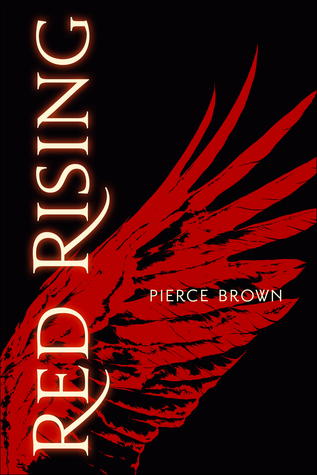
This book is fucking amazing.

I felt so compelled to praise this book after I finished it, that I actually updated my Facebook status for once, with a long-ish paragraph about how awesome this was and how there will no doubt be a bidding war for the rights to make the movie for this. 
And yes, this February, Universal Pictures outbid Sony with a seven-figure sum for Red Rising's screen rights. The guy who directed World War Z, Marc Foster, is apparently steering the helm. 

So Red Rising is actually what it is advertised by its marketers: Ender's Game meets The Hunger Games.

That is LITERALLY what Red Rising is. But just because the novel is unoriginal doesn't make it any less fun. Because it is helluva fun. And anyway, books and films are inspired by iconic works all the time. 

As an obsessive Ender's Game fan, I actually felt like Red Rising was an homage. Clearly, the very young 27 year old Pierce Brown also grew up reading Ender's Game and revering its genius protagonist Ender Wiggin (one of the most iconic characters in all of science fiction). In Red Rising, he combines everything that made Ender's Game good, and everything that made The Hunger Games good, and chucked it in space. 

And I love. Space operas.

So yeah, the book is as they say on Good Reads - "unputtadownable".


THE MARTIAN by Andy Weir (2011)   -  movie coming out in November 2015
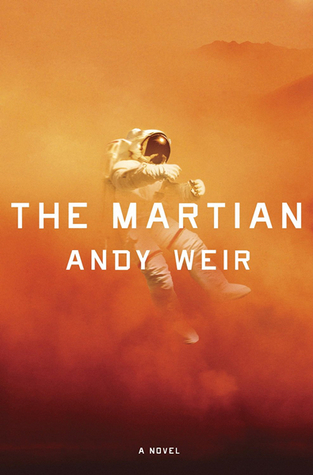
Only fedora-wearing science nerds will really like. Although I'm still excited to see the movie. 

This book  revolves around an astronaut named Mark Watney, who is accidentally left behind in a shuttle on Mars during an expedition gone wrong. He has to rely on his extensive knowledge of space, physics, chemistry, engineering and botany to survive until someone on Earth figures out he's still alive.

Even though 104467 people have given it a 5/5 rating on Good Reads, and it has garnered critical reception generally, I would only give it a 1/5. 

First, and to be fair, I never 'studied' science. Sure, I did it all the way up to year 10, as is compulsory, then dropped the science subjects and picked up a few math ones and the rest were humanities based. Think politics and history. So ironically, as a science-fiction lover, I am NOT savvy with the hard science. Thus, this entire book, which is 90% explanation, goes way over my head. No doubt, those with an actual science background will probably love it, and feel some sort of resonance when reading about all the great and ingenious ways Matt devises to make food and communicate with the outer world.

The second point though, is actually its shitty protagonist, which is a fair literary condemnation. See, I don't REALLY mind the whole exposition thing as I keep telling myself - "this is probably the exact reason why people like it" - but then I still couldn't get past Mark Watney.

Watney is one of the biggest douchebags ever, and if I had to work with anyone with a similar personality, I would kill myself. This is the most terrifying thing because according to the book, Mark Watney was chosen specifically for his 'terrific' personality - easygoing, funny, a real bro. HAHAHAHAHA OR THAT'S WHAT ANDY WEIR LIKES TO THINK.

Someone on Good Reads who gave 2 stars actually did a quick background check on author Andy Weir and basically found that he has spent his entire life in academia, studying hard sciences. And while that is very admirable, the impact on his social life/skills - WELL, it's pretty goddamn obvious in the book. There are a crapload of 'hilarious' puns, 'smooth' pick-up artist lines (similar things), 'cool-guy' swearing when actually unnecessary, misogynistic jokes about women, and a heavy sense of obnoxious arrogance that is played off as 'smart funny genius'. The only people who don't agree with me are probably people that buy into that sort of crap.

I HATED MARK WATNEY AND WANTED HIM TO DIE IN THE SHUTTLE SO WE CAN BE FREE OF HIS PENIS JOKES. The end.


ANCILLARY JUSTICE  by Ann Leckie (winner of the 2014 Hugo, Nebula AND Arthur C Clarke awards!! The three biggest prizes in SF)
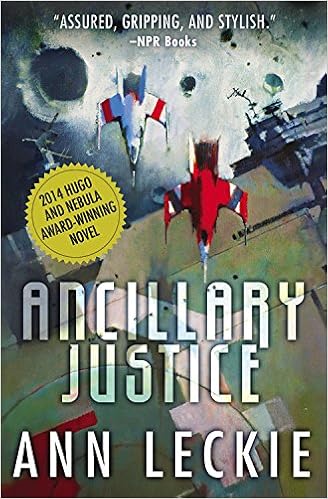
A totally unexpected thriller. Of mind-blowing creativity. 

I'm only half-way into this but my god. Ancillary Justice is good. It's addictive. It's almost Red Rising addictive. But the thing that makes it better than Red Rising

Originality.

The main character/first person narrator, Breq, isn't human. She's AI. And she's not just an AI controlling one body, like how we usually imagine AI - as an android. She is an AI that controls a humongous warship, and twenty other human bodies (soldiers) at the same time. She IS all of them at the same time. 

*note that she is only referred to by the pronoun 'she' because her human shells/bodies are female. 

And the greatest thing ever? You get to dive inside her mind, and read descriptions of her seeing and feeling the world simultaneously from her different sets of human bodies. And no, not as separate chapters, but as real-time back-and-forth switching which is described within sentences - within paragraphs! And the writing isn't spasmodic at all; instead, it maintains a high quality of consistency throughout the chapters I've read. Overall, the effect is eerie, but incredibly cool, if I have to use the word. 

I haven't finished the book yet, but so far, it remains a mystery why there is only ONE (shell) of her left. 

Ancillary Justice is apparently being picked up by Fox Studios as a TV series. 

Sunday, 9 March 2014

Book: The Battle Hymn of the Tiger Mother (+ my rants on Chinese parenting)

If you are a parent, you should read this book and then read my blog post. If you are an Asian kid with tiger parents, let's totally empathise about how miserable our childhoods were.


"Unjustified as Mrs. Kazinczy may have been, she was still a teacher, an authority figure, and one of the first things Chinese people learn is that you must respect authority. No matter what, you don't talk back to your parents, teachers, elders." - Amy Chua in The Battle Hymn of the Tiger Mother

WHAT? WHAAAAAAT?

That is one of the most disgusting things I have ever read.  And if Amy Chua could see me right now, I would vomit the bok choy and mi goreng I had for lunch all over her book in a furious display of disapproval. 

For a Yale law professor who is married to another Yale law professor, this woman can be ridiculously atavistic. One of the overwhelming themes in this 'satirical' auto-biography about raising her daughters is that all ADULTS ARE GODS and even when they're manifestly wrong, children must treat them like they're right i.e. smile and take their shit.

Well....fuck


NO.


I despise this sort of Chinese style parenting and I disagree with the idea of 'respecting' your elders so much that you aren't allowed to speak up and reason with them. If I ever became a mother, I would treat my children like mini-adults, training them to think for themselves and encouraging them to try their hand at winning an argument with cogent reasoning (even if it's on the topic of 'why we should watch TV first and do homework second').  

To derogate your kids and oppress their thoughts is just tyrannical - I mean, hasn't anyone read Ender's Game already? Children are never 'stupid' - they're inexperienced, and their thought processes are much more sophisticated than some adults would ever imagine. To think that it's okay to win arguments by yelling (anything tantamount to:) "BECAUSE I'm your mother" or "I'm the one who puts a roof over your head and food on your table" is therefore, ridiculously fascist and in a way will actually indoctrinate your children with the idea that it is okay to ignore other people's opinions and to impose arbitrary rules upon others if you are their superior. 


This is also something my dad firmly believes in. He used to be an Eagle Dad (dad version of tiger mum) and during our countless screaming matches, I would protest about the inevitability that I would lose the argument because, DUH, I was the 'child' and had no real power in the relationship. For example:

"This is so unfair! So many people have told me that I'm good at drawing!"

"DRAWING AMOUNTS TO NOTHING. DO YOU WANT TO BECOME A BEGGAR LIVING ON THE STREET??? DRAWING IS FOR IDIOTS. I SAID NO DRAWING LESSONS AND THAT'S THAT."

"I HATE YOU!"

"LIVE WITH IT CINDY. I'M YOUR DAD AND I'M THE ONE WITH THE MONEY AROUND HERE. YOU WANT TO CHALLENGE ME ABOUT IT? WELL TOO BAD, THIS IS THE NATURAL HIERARCHY OF POWER AND PEOPLE UP THE TOP GET TO DO WHATEVER THEY WANT WHILE THOSE AT THE BOTTOM ARE SLAVES TO POWER."

- my dad, in those exact bloody words.

And no doubt, it's not just my dad. I know a lot of my peers who believe that it is also a 'way of life' that powerful people get to treat others like shiet - and accepts it. It's a traditional way of thinking and unless we're living in Japan, South Korea or some other heavily Confucian-infused culture where it would be impossible to speak back to a superior without getting abused/fired, I think it's bullshit. 

ugh.

And that's exactly what Louisa, Amy's younger daughter, thought of it. She turned out a bit like me. After suffering under dictatorial rule for years and years, she started to rebel at every opportunity. 

Yelling back. Throwing things across the room. Banging on walls. Crying and screaming unabashedly in classy restaurants and threatening to throw glass cups onto the floor/table/wall. Dobbing on the parents to teachers. Telling our friends.

It was war. 

And in the end, Louisa won. That's really what the whole book is about in the first place. Amy Chua wrote this book because she is the world's biggest humble-brag.

By the time she admitted that Chinese parenting was tearing them apart and had apologised to her daughter, she had already vaunted for 300 pages about how both her daughters had become academic geniuses and musical virtuosos, with Louisa, still a preteen, being invited to play the violin at concerts and stuff. 

SO IN CONCLUSION, Amy Chua still believes that despite all the pain and suffering they both went through, it was definitely worth it.  At least for her, she says.

DO YOU THINK IT'S WORTH IT?
 What if you tried the same method with your children (pushing them really hard at school and music etc.), produced a mean maths machine who won every single gold medal at Maths Olympiad, only to lose their love? And what if, due to your constant subjugation, your son turns into a guy with no self-confidence? 

Wellity well well, here comes the turning point. Apparently, Louisa and her mum made up and now they love each other very much. But every child and family is different. In my household, my dad and I are pretty much still at loggerheads every second. We're totally dysfunctional and I can't remember any time we've ever said "I love you" (compared to Amy and Louisa, who apparently have always had a habit of writing little notes of love to each other). And Amy has to understand that not every Chinese parent is a Yale Law school professor with perfect English and connections to the best academic resources in the world (there was one night where she invited a whole bunch of Supreme Court Judges to a family dinner). The fact that her daughters are still grateful for what their mum has given them despite her fascist tutelage really fucking depends on these sort of things.

The only thing I will respect Amy Chua for is her dedication to her children. That's it. Things like her unhesitating willingness to make hour long driving trips at 6am so that her children can attend music lessons, or to spend her pensioner's savings on their tuition. 

I mean, my parents yell at me for still being on my L plates, and yet 90% of the time when I ask them to sit beside me while I drive somewhere, they will say they're "way too exhausted" = can't be fkd. Seriously mum?!?!

Anyway. Chinese parenting is a bet of a lifetime.

If you succeed to win back your children's love after making their lives miserable, then it's worth it. Really worth it. 

If you don't, your children will hate you forever and never want to speak to you again. 

The only certain thing in both situations - they will have no childhood.


Thursday, 13 February 2014

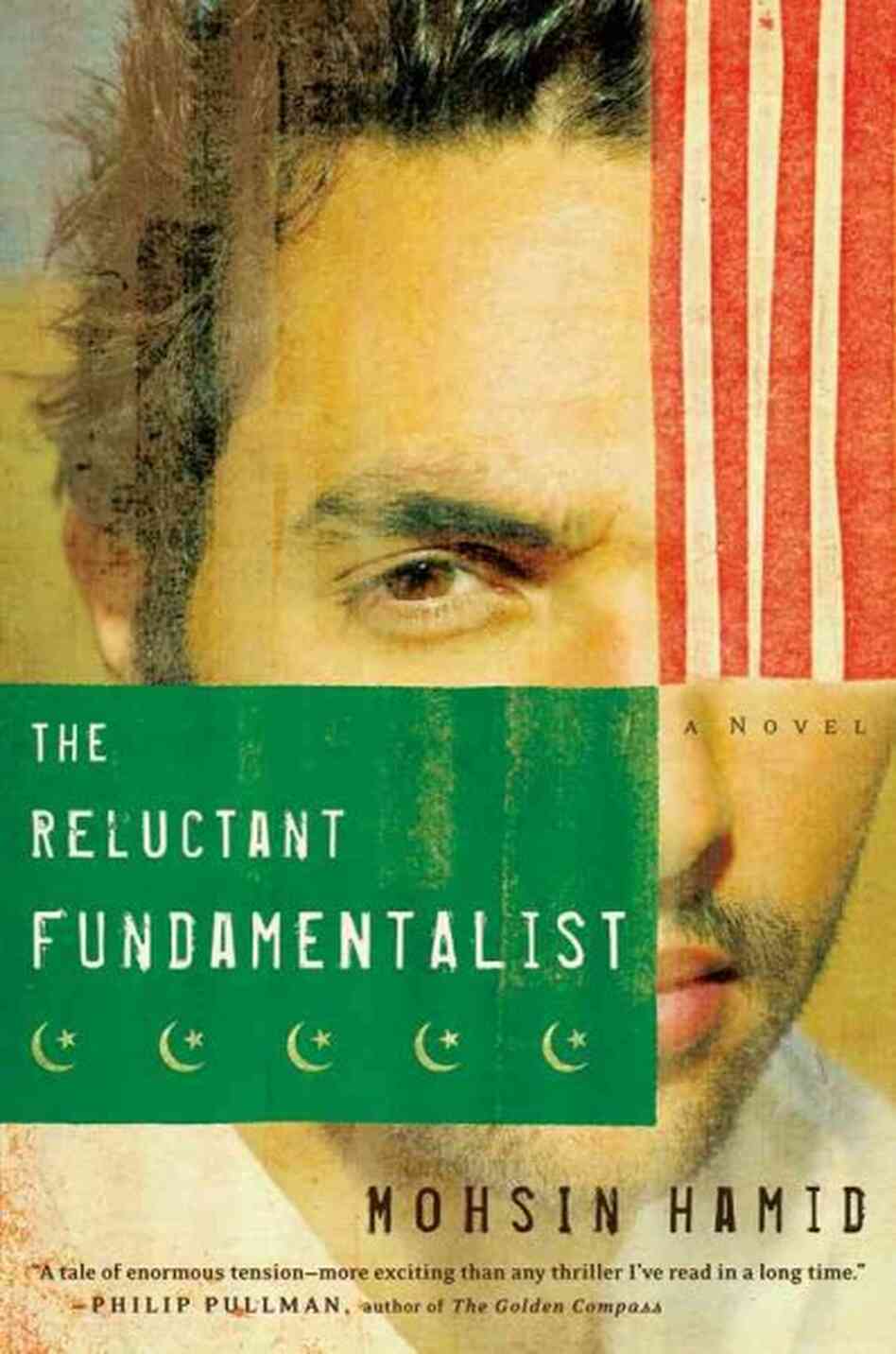
Book: The Reluctant Fundamentalist

Oh my gad. Dem feelz.


Why did I read this?

To help my COD and LOL/DOTA addicted brother get through the throes of VCE English.

Did I like the book? 

Yes. I loved it.

As I closed the woebegone cover of a library copy, I took a deep breath and leaned back in my chair, letting the crepuscular shards of sunlight hit my closed eyes through the window's laced curtains. I stared up at the ceiling and heaved, a single tear rolling down my cheek. I could almost hear Norah Jones' come away with me play in the background - the perfect soundtrack to a cliffhanger ending that was both sudden and utterly compelling.

What. A. Story.

Why did I crai?

I know for sure that if I had studied this book to death for VCE, I wouldn't have liked it as much, or even liked it at all. Firstly, I would have been way too caught up with the technicalities i.e. analysing the context, prose, themes, motifs, quotes. That would have stultified any sort of initial enthusiasm I had for the story. Secondly, I would have been too young and inexperienced to gage the significance of the protagonist, Changez's agonising self-discovery. 

But now, at 19.83 years of age, having lost the cock-sure attitude of first year uni and now grappling with issues concerning the uncertainty of my own future, I could actually empathise with Changez's problems. See, one of the main narratives in this story is about the 22 year old Princeton graduate's career at the exclusive valuation firm, Underwood Samson. After battling his way through a ridiculously competitive interview process, Changez wins a position at the firm and becomes its top new performer. Life seemed perfect. He got good money. He was dating a beautiful girl he had been smitten with for a very long time. He had won people's respect.  

But what does this all amount to in the bigger picture? 

Nothing, as Changez would discover.

His home country, Pakistan, is being invaded by American troops. His family lives in fear and danger. Pakistani cab drivers in New York are being racially abused after 9/11.
The love of his life spirals into depression.  
His company, Underwood Samson, gets rich by advising other companies where to lay off workers.

On the surface, his life seemed perfect. But behind the facade, things were pretty fucked up, and he was not in a position to change the status quo. To be honest, that's reality for most people. 

I related so much to Changez's story because like him, I once had a very clear image of my life's trajectory - I was so sure of where I was going to go. I was ambitious, passionate and idealistic. In fact, I wanted to change the world.

Suddenly, some shit things happened and I grew up a bit. Whether it be family or friends, academics or career prospects, some of my friends and I were becoming disillusioned, upset and a bit lost. We all felt the need to 'ace life', or at least show everyone else that we were. We were confronted with harsh realities and we had to make hard decisions. 

For Changez, 9/11 and its aftermath definitively changed the way he looked at America, but it was not until the girl he loved, Erica, committed suicide that he finally woke up to discover a robotic white-collar life at Underwood Samson did not amount to anything resembling true happiness or 'The American Dream'. He quit and went back to Lahore where his family lived. 

Of course, the book touches on a lot of other themes including American neo-Imperialism and cultural identity. These are pivotal catalysts for the story but for me, it was primarily Changez's harrowing love story with Erica and his disillusionment with his career that really hit me hard in the feelz. I guess my interpretation of where in the story lies its significance also says a lot about who I am and what I've been through.

I would recommend this book to everyone, especially people who are at least of university age. Not to be condescending, but I doubt most high schoolers, especially the happy-go-lucky ones would be able to truly empathise with Changez and understand the weight of his decisions.  

But... whatever. Good luck to my bro.