Thursday, 22 October 2015

'What is the Korean Wave and how has borderless media contributed to its success?'


What is the Korean Wave and how has borderless media contributed to its success? In examining the reasons for the global popularity of the Korean Wave, you must also consider whether it is a unique phenomenon.
(2014 Semester 1 University Essay for 'Borderless Media in East Asia' / Grade: HD)


Introduction

The campy tune was ubiquitous, the dance parodies were endless and the media hailed the phenomenal global response to the 2012 song Gangnam Style as a sign of a new cultural zeitgeist – the Korean Wave: the explosive rise of South Korean pop culture, from its pop music to its television dramas and online games, throughout the rest of the world.[1] Indeed, the music video for Psy's Gangnam Style hit one billion views within six months of upload and still holds the record for most viewed YouTube video as of May 2014.[2] While no other Korean artist has come close to replicating the success of Gangnam Style since then, including Psy himself, stunned commentators have become acutely aware of the intensifying popularity of Korean dramas, music and games outside of Korea – a cultural industry worth $10 billion and estimated to increase to $57 billion by 2020.[3] With 182 Korean Wave fan clubs worldwide, including 3.3 million official members, the global reach of the Korean Wave stretches from East Asia to unassuming places like Latin America, Europe and even the Middle East.[4] In the midst of such exciting developments, this essay discusses whether the Korean Wave is a unique phenomenon in being able to achieve global popularity, and analyses the ways that borderless media have helped it transcend cultural and geographical barriers.

Why is the Korean Wave so successful?

1.       Government Sponsored Nation-branding

The first and arguably most significant factor of the Korean Wave harks back to its origins as a government sponsored initiative to compete against neighbouring economies and to ensure the survival of a Korean national identity in the face of rapid globalisation. Kim argues that the government played an indispensible role in initiating its growth in the private sectors as it reacted to the devastating 1997 Asian financial crisis.[5] Pressure from the IMF and WTO, as well as China’s competitive threat to South Korea’s manufacture based economy, led to the implementation of numerous neo-liberal policies. These included the increased privatisation of public broadcasting, liberalisation of domestic markets, deregulation of media and the emergence of multi-media conglomerates that had taken advantage of these new freedoms. More importantly, restrictions on the broadcast of foreign media were lifted and Hollywood studios were able to distribute films directly to local theatres.[6] Kim contends that trade experts naturally took inspiration from Hollywood and looked to cultural exportation as a way to market South Korean goods and services.

In contrast, Shim argues the success of the Korean Wave should be attributed more to “Korea’s struggle for cultural conformity when confronted by the threat of global cultural domination.”[7] Still smarting from its colonial history, the government in as early as 1994 sensitively observed that the overall revenue from the US film Jurassic Park was worth the foreign sales of 1.5 million Hyundai cars – cars regarded as the Pride of Korea. This defeat prompted the Presidential Advisory Board to submit a report asking the government to promote media products as a national strategic industry.[8]

Consequently, systematic infrastructures were implemented as part of a specific policy to globalise the Korean culture industry. President Kim Dae Jung immediately allocated $148.5 million the year after his inauguration to establish the Basic Law for the Cultural Industry Promotion in 1999.[9] Funding was used to establish film schools, media scholarships and also the creation of the Pusan International Film Festival. Large companies like Samsung and LG were also required to invest in the industry, with LG reported to have provided Vietnamese TV stations with several Korean TV dramas for free, even covering the cost of dubbing. Of course, the actors are subsequently hired for endorsements by LG and other Korean companies.[10] As a result, drama themed group tours to Korea from Taiwan experienced a 50% increase from 2002 to 2003; enrolments for Korean Language at the Inlingua School of Language in Singapore increased 60% in 2003 compared to 2001 and sales of Korean cosmetics in China tripled to $336.8 million from 2009 to 2010.[11]

Overall, Kim states that “Korea may be the first nation to consciously recognise and, more importantly, form official policy and take action towards becoming a dream society of icons and aesthetic experience.”[12]  


2.       Cultural hybridisation and glocalisation

The second key reason for the Korean Wave’s global success is its ability to skilfully blend western and Asian cultural values, styles and genres to create its own ideal – known as a process of cultural hybridisation.[13] The result is an image of Korea that is modern and cosmopolitan, looking much like the west, yet still retaining the traditional Confucian values of Asia, such as familial piety, respect for elders and sexual abstinence. For example, many Korean dramas, including the 2009 phenomenon Boys Over Flowers, revolve around members of the young urban middle class and are set in the sophisticated metropolises of Seoul or Incheon. However, the narrative is heavily infused with “Asian values” such as family unity and pursuit of education, and usually the protagonist will endure against difficulties by upholding these Confucian values.[14]

This hybridised ideal image is extremely appealing to Asian audiences, including diasporas. In Austria, a Japanese fan of Korean dramas said “Korean popular culture contains strong Asian values which are lacking in modern Japanese pop culture” and a Taiwanese fan said “Japanese dramas are just trendy and well made but sometimes it is not realistic… Korean dramas are more ‘Asian’ to me. Maybe that is why I watch Korean dramas so often, because I miss home.”[15]  Sung posits that the heavy emphasis on Asian values still retained in Korean dramas  is a strong selling point in Asia because it offers a cohesive identity and sense of community for members of Asian diasporas who may struggle to integrate with the ‘progressive ‘culture of the mainstream host society. Moreover, the appeal of Confucian values in Korean dramas has won support from even audiences in the Middle East where more conservative depictions of family and love are preferred.[16]

Apart from cultural hybridisation, producers also engage in strategies of glocalisation – a practice of “providing customisable territory-specific content and extensive localisation services for products that are distributed regionally.”[17] For example, the major Korean talent agencies that train and produce all of the country’s K-pop bands have, since the early 2000s, adopted a strict regime of teaching Chinese and Japanese to their most promising talents. The South Korean girl group SNSD are able to sing in both Korean and Japanese, while the members of the boy group EXO is split into EXO-M – the Mandarin singers, and EXO-K – the Korean singers. Thus, they are more able to market their songs effectively to audiences in both regions.

Korean online games are also very glocalised and hence, are able to enjoy worldwide popularity. According to Jung Ryul Kim, the Chairman of Gravity Corporation, the formula for successful regional distribution is to firstly, make the game familiar to target users and secondly, hire someone who knows local users well to deliver it.[18] The South Korean game Lineage, often ranked within the top 5 online games in the world, demonstrates both cultural hybridisation and glocalisation. It is set in a European medieval environment, but the game play itself mirrors the Confucian hierarchy of Korean society as players must formulate themselves into a strict hierarchy of leadership – a feature that would and has never be produced in America as players tend to prefer individual autonomy. Moreover, depending on the market, native speakers are hired to do translating for the game. For Russian players, Russian slang and axioms are added in; the same for Chinese and English players. Animation, architectural and dress styles are also altered to fit the different markets.[19] Overall, the global success of the Korean gaming industry, like its pop music industry, lies in culturally hybridisation and glocalisation, thus transcending cultural and language barriers.[20]

3.       Social media and fan participation

Finally, the third key factor in the rise of Korean pop culture on a global scale is the availability and avid use of social media networks by fans. With the emergence of smart phones and various social media platforms like Blogger, Facebook, MySpace and Twitter, fans are able to create vast networks, share photos and songs, facilitate and engage in discussion about their favourite Korean idols at incredible ease. In fact, YouTube has been hailed by Ono and Kwon as a critical “k-pop interlocutor”.[21] They argue that K-pop is wholly based upon performance and aesthetics. The cool synchronised dances, the flamboyant fashion and the stars’ perfectly sculpted faces and bodies are its selling points because they depict an ideal, modern cosmopolitan look – the reason why K-pop can transcend the language barrier as “the visuality of performance [is] central to what makes K-pop circulable”.[22]

In aspiring to look like K-pop stars, there is now a phenomenon of fans uploading dance covers of their favourite K-pop dances onto YouTube, some even wearing similar outfits. Khiun posits that this active fan participation is more than just imitation but reinterpretation and recalibration of K-pop, and that the ability of anyone from around the world to participate is “decentring and transcending the geo-social and cultural boundaries of the highly manufactured and rigidly regimented industry.”[23] For instance, pale white skin is considered beautiful in Korea and so most Korean pop stars have very pale skin. Those with dark skins are singled out conspicuously by the scrutinising Korean public.[24] However, fans with darker skin (such as those from Latin America) who upload K-Pop dance covers are breaking those standards while actively promoting a more global and cosmopolitan image of K-pop. This notion is very interesting as Khiun identifies a contra-flow of culture where the fans are the ones responsible for manipulating, changing and perpetuating the very cultural products they are consuming. Overall, the active movements of fan clubs, including the mass uploads of dance covers, are testaments to how borderless media has allowed for greater accessibility of Korean pop culture as well as the ability for fans to change its inherent socio-cultural standards.

A Unique Phenomenon?

Some people may believe that the Korean Wave is a unique phenomenon, driven by new information technologies, glocalisation and of course, the avid support of the South Korean government. This may very well be true, considering that the closest comparison that can be made is with the Japanese cultural mania that peaked in the 1980s and 1990s – back in a time when the internet did not exist.[25] Perhaps that fact itself lends credence to the uniqueness of the Korean Wave. Currently, Japanese pop culture is in a slump. Its music industry is still the second largest market for music in the world, but its market size fell by 8.3% in 2010.[26] The Japanese accounted for 50% of the world gaming market in 2002 but in 2012, that figure has fallen to 10%.[27] Keiji Inafune, global head of production at Capcom, summed up Japan’s lagging gaming industry with one apt simile: “It’s like sushi. Everyone loves sushi in the West, but you can’t just serve sushi over there like it is in Japan.”[28] His sentiment clearly underscores the importance of cultural hybridisation and glocalisation when exporting cultural products. However, the question is why Japan has failed to implement the same strategies as South Korea. Many commentators have held the opinion that the Japanese government or media may not think it necessary to market to the world when they already have such a big domestic market. And of course, their strong competitive economy may account for this comparatively laissez-faire attitude. But no matter, South Korea has clearly taken full advantage of technologies and glocalisation strategies where Japan has not – using borderless media to foster a trendy cosmopolitan image of its culture. At its current rate, the Korean Wave is leaving Japan far behind and appears on course to challenge the most strategically important market of all – the US.


BIBLIOGRAPHY:

Journal articles

Chan, Dean. “Negotiating intra-Asian games networks: on cultural proximity, East Asian games design and Chinese farmers.” Fibreculture Journal: internet theory criticism research no.8 (2006): 1-16.

Huang, Shuling. “Nation-branding and transnational consumption: Japan-Mania and the Korean Wave in Taiwan”. Media, Culture & Society, 33, no.1 (2011): 3-18.

Shim, Doobo. “Waxing the Korean Wave.” Asia Research Institute Working Paper No.158 (2011): 1-21.

Wasserman, Todd, and et al. “Land of the Rising Sun.” Brandweek 46, no.8 (2005): 22-29.

Books and Book chapters

Jin, Dal Yong. “Hybridisation of Korean Popular Culture: Films and Online Gaming.” In The Korean Wave: Korean Media Go Global, edited by Youna Kim, 148-164. Taylor and Francis, 2013.

Khiun, Kai Liew. “K-pop dance trackers and cover dancers: Global cosmopolitanisation and local spatialisation.” In The Korean Wave: Korean Media Go Global, edited by Youna Kim, 165-181. Taylor and Francis, 2013.

Kim, Youna. “Korean Media in a Digital Cosmopolitan World.” In The Korean Wave: Korean Media Go Global, edited by Youna Kim, 1-27. Taylor and Francis, 2013.

Kim, Youna. “Korean Wave Pop Culture in the Global Internet Age: Why popular? Why now?” In The Korean Wave: Korean Media Go Global, edited by Youna Kim, 75 – 92. Taylor and Francis, 2013.

Nye, Joseph, and Youna Kim. “Soft Power and the Korean Wave.” In The Korean Wave: Korean Media Go Global, edited by Youna Kim, 31-42. Taylor and Francis, 2013.

Ono, Kent A., and Jungmin Kwon. “Re-Worlding Culture? YouTube as a K-pop interlocutor.” In The Korean Wave: Korean Media Go Global, edited by Youna Kim, 199-214. Taylor and Francis, 2013.

Sung, Sang-yeon. “Digitisation and Online Culture of the Korean Wave: ‘East Asian’ Virtual Community in Europe.” In The Korean Wave: Korean Media Go Global, edited by Youna Kim, 135-147. Taylor and Francis, 2013.

Websites and videos

Mark Cieslak, “Is the Japanese gaming industry in crisis?” news.bbc.co.uk, posted 4 November 2010. http://news.bbc.co.uk/2/hi/programmes/click_online/9159905.stm

OfficialPsy, Gangnam Style (online video, May 4, 2014). https://www.youtube.com/watch?v=9bZkp7q19f0&feature=kp


Peter Dyloco, “Can J-pop replicate the success of K-pop?”  japantoday.com, posted 15 September 2011, http://www.japantoday.com/category/opinions/view/can-j-pop-replicate-success-of-k-pop

“Photos of Tanned K-Pop Band Spark Controversy Over Skin Colour,” koreabang.com, posted 3 July 2012,  http://www.koreabang.com/2012/pictures/photos-of-tanned-k-pop-band-spark-controversy-over-skin-colour.html


[1] Shuling Huang, “Nation-branding and transnational consumption: Japan-Mania and the Korean Wave in Taiwan”, Media, Culture & Society 33, no.1 (2011): 3.
[2] OfficialPsy, Gangnam Style (online video, May 4, 2014). https://www.youtube.com/watch?v=9bZkp7q19f0&feature=kp
[3] Youna Kim, “Korean Media in a Digital Cosmopolitan World,” in The Korean Wave: Korean Media Go Global, ed. Youna Kim (Taylor and Francis, 2013), 6.
[4] Youna Kim, “Korean Media,” 13.
[5] Youna Kim, “Korean Media,” 4.
[6] Doobo Shim, “Waxing the Korean Wave”, Asia Research Institute Working Paper No.158 (2011): 1-21, 7.
[7]Doobo Shim, “Waxing the Korean Wave,” 7.
[8] Doobo Shim, “Waxing the Korean Wave,” 8.
[9] Doobo Shim, “Waxing the Korean Wave,” 10.
[10] Youna Kim, “Korean Media,” 12.
[11] Youna Kim, “Korean Media,” 12.
[12] Youna Kim, “Korean Media,” 4.
[13] Doobo Shim, “Waxing the Korean Wave,” 14.
[14] Youna Kim, “Korean Wave Pop Culture in the Global Internet Age: Why popular? Why now?” in The Korean Wave: Korean Media Go Global, ed. Youna Kim (Taylor and Francis, 2013), 80-84.
[15] Sang-yeon Sung, “Digitisation and Online Culture of the Korean Wave: ‘East Asian’ Virtual Community in Europe,” in The Korean Wave: Korean Media Go Global, ed. Youna Kim (Taylor and Francis, 2013): 135-147
[16] Joseph Nye and Youna Kim, “Soft Power and the Korean Wave,” in The Korean Wave: Korean Media Go Global, ed. Youna Kim (Taylor and Francis, 2013), 34; Youna Kim, “Korean Wave Pop Culture in the Global Internet Age: Why popular? Why now?” in The Korean Wave: Korean Media Go Global, ed. Youna Kim (Taylor and Francis, 2013), 80.
[17] Dean Chan, “Negotiating intra-Asian games networks: on cultural proximity, East Asian games design and Chinese farmers,” Fibreculture Journal: internet theory criticism research no.8 (2006): 1-16, 6.
[18] Dean Chan, “Negotiating intra-Asian games networks,” 6.
[19] Dean Chan, “Negotiating intra-Asian games networks,” 4-5.
[20] Dal Yong Jin, “Hybridisation of Korean Popular Culture: Films and Online Gaming,” in The Korean Wave: Korean Media Go Global, ed. Youna Kim (Taylor and Francis, 2013), 148.
[21] Kent A. Ono and Jungmin Kwon, “Re-Worlding Culture? YouTube as a K-pop interlocutor,” in The Korean Wave: Korean Media Go Global, ed. Youna Kim (Taylor and Francis, 2013), 199-214.
[22] Kent A. Ono and Jungmin Kwon, “Re-Worlding Culture?” 208.
[23] Liew Kai Khiun, “K-pop dance trackers and cover dancers: Global cosmopolitanisation and local spatialisation,”in The Korean Wave: Korean Media Go Global, ed. Youna Kim (Taylor and Francis, 2013), 172.
[24] “Photos of Tanned K-Pop Band Spark Controversy Over Skin Colour,” koreabang.com, posted 3 July 2012,  http://www.koreabang.com/2012/pictures/photos-of-tanned-k-pop-band-spark-controversy-over-skin-colour.html
[25] Todd Wasserman et al., “Land of the Rising Sun,” Brandweek 46, no.8 (2005): 22-29.
[26]Peter Dyloco, “Can J-pop replicate the success of K-pop?”  japantoday.com, posted 15 September 2011, http://www.japantoday.com/category/opinions/view/can-j-pop-replicate-success-of-k-pop
[27] Mark Cieslak, “Is the Japanese gaming industry in crisis?” news.bbc.co.uk, posted 4 November 2010. http://news.bbc.co.uk/2/hi/programmes/click_online/9159905.stm
[28] Mark Cieslak, “Is the Japanese gaming industry in crisis?”

Wednesday, 30 September 2015

Movie: The Visit


The verdict: I cannot look at my grandma in the same light after this. 

Yesterday night, I made an extemporaneous trip to the cinema with my friend and boyfriend to watch M. Night Shyamalan's newest found-footage horror film, The Visit. I had seen the trailer ages ago and legitimately laughed out loud at what I thought was a total joke movie. You really can't take the plot seriously - two kids visit their grandparents at their lovely country home and find out that cuddly grandma's actually a complete freak with Formula 1 crawling skills. It doesn't sound scary at all. It sounds absolutely hilarious.

Of course, it then made a lot of sense when my friend said before the movie "Hey, you know this is a horror comedy right?" and I was like, "Fuck." I hate horror-comedies. Because horror-comedies aren't scary. For example, Shaun of the Dead and Zombieland are classic paragons of the horror-comedy genre but I would personally classify them as 100% comedy and 0% horror. I didn't find them scary at all, but even worse, I also didn't find them very funny. A few laughs here and there but nothing memorable that would have made it a great movie (which is not the consensus, I know). 

The one experience that really turned me against the genre was when I bought and watched Sam Raimi's Drag Me To Hell during schoolies (another completely shit experience). Even though the movie had received rave reviews (92 percent on RT), I remember everyone agreeing that it was one of the worst horror films they had ever seen. The thing is, we were all looking forward to REAL SCARES, not hilariously bad scenes of projectile vomit. So of course, it just became an extremely disappointing 2 hours. 

Back to The Visit.  I had also walked into the cinema knowing that the last few movies Shyamalan had directed were tantamount crimes against humanity, namely The Last Airbender and Jaden Smith's coming-of-age in After Earth. In light of all this, I was not expecting anything actually scary or, well, anything that would be good from The Visit.

BOY WAS I WRONG.

The Visit was good. Very good. 

The last time I had laughed and screamed at the same time during a movie was in Year 8 when my two BFFs and I were watching C-class horror movie The Unborn. There was this one scene where an old man in a wheelchair suddenly appeared at the top of a staircase, and then slowly crawled its way down with every possible bodily appendage (except for the penis) circumducting at varying weird angles and speeds. It was pretty horrific, but so over the top that we couldn't help bursting out into fits of laughter, as did the rest of the mostly tweenage audience. However, The Unborn was still overall a shit movie. It tried to be horror and failed.

The Visit, on the other hand, was a self-conscious horror-comedy which got pretty much everything right because it did manage to make me simultaneously laugh and scream in fear. Creepy grandma really blew it out of the water. 

The two sibling protagonists Rebecca and Tyler, aged 12 and 8 respectively, were not annoying at all but incredibly intelligent, funny, and precocious kids. Rebecca was the slightly uptight older sister with a huge interest in 'organic filmmaking', which is why she wants to document the visit. 
Tyler is an adorable aspiring rapper whose witty lines and cheesy smile steals the show. Both characters really drove the film and sparkled with their banter, sarcasm, and occasional rap sessions. They were developed well enough for us to truly care about them. 

There were of course a number of jump-scares in the movie, but Shyamalan manages to gradually and consistently build up suspense, keeping whatever it was that was wrong with grandma and grandpa a total secret until the final climax - which is awesome because you keep trying to guess what it is, and for some time, I still believed that supernatural elements might have been at play. Thankfully, there were no stupid supernatural cop-outs in the movie and everything that went 'wrong' was purely human. 

Anyway. What a great, fun and truly enjoyable movie. Diehard horror movie fans - don't be put off. This is still one that is able to supply the thrills and scares. 


Saturday, 19 September 2015

Reading all the next big sci-fi blockbusters before they happen

This year, as a semi-serious and quasi-redundant law student, I have been devouring a respectable number of novels to appease my growing science-fiction appetite. If you have read some of my previous posts, you may have realised that I am a pretty serious cyberpunk fan. And that I watch a shit tonne of movies.

Anyhow, so I've realised that most of the novels I've read this past year will all be turned into movies very soon. So since it's Saturday and my deadline for my freelance articles are due tomorrow, I thought - NO BETTER WAY TO PROCRASTINATE THEN TO SPEND 3 HOURS WRITING SHIT THAT ISN'T ACTUALLY DUE.

Truly orgasmic cyberpunk scenery

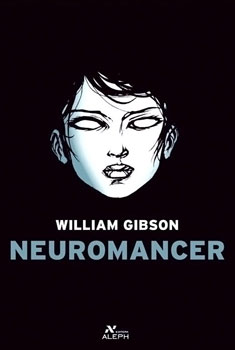
NEUROMANCER by William Gibson (1984)

For the last few years, I've been trying to get more into the world of cyberpunk and sci-fi literature. I've attempted to read William Gibson's 1984 novel Neuromancer, which is the biblical work of the cyberpunk genre, but because I only have soft copies of it on my laptop and iPhone, I've been finding it really hard to actually... you know, physically read it. Moreover, jesus christ, I know Gibson is like the forefather of cyberpunk but, and it pains me to say this, his writing style is spasmodic as fuck. I just. Can't. Follow it. 

A sojourn into online forums of the genre reveal that I'm actually far from the only one who has this opinion about Gibson's writing. A lot of other cyberpunk fans also have trouble with the way Gibson paints a whole new world at the speed of light. Every second sentence features a new technology or object that is never ever explained - it's a part of this new exciting universe that's simply thrown at you. But yeah, it gets confusing and by the third chapter, you've got a migraine. 

Nonetheless, Neuromancer is universally considered as one of the origins of cyberpunk and a massive inspiration for a lot of subsequent movies and novels (e.g. The Wind-up Girl by Paolo Bacigalupi; anime series Cowboy Bebop). I vow to finish reading it no matter what. 

Plus, Hollywood is apparently in talks to develop a movie for Neuromancer, which is exciting, especially visually. 

But then Hollywood also wants to develop live action movies for Ghost in the Shell and AKIRA...
lel which means I'm holding my breath until they cast someone who is actually fucking Asian, and not a joke like this one:

Jackson Rathbone as an Asian robot in The Last Airbender.


READY PLAYER ONE by Ernest Cline (2011)


Ha.

Hahahaha.

Hahahahahahahahhaahahaha.


Do not even talk to me about this bound-volume of what is essentially toilet paper.

If you want my final thoughts on it, you can find my full page review in E-Magazine, which I will not link here as I am paranoid about employers tracing into my blog. But you CAN pick up a copy at a local restaurant, cafe or library. Especially in Box Hill.  Or, ask me in person because I will not be able to refrain from verbally ranting about its endless tropes and cliches, and...

The worst fucking cliche any YA sci-fi/dystopian novel can ever ever ever ever ever spew onto your screen or page is the sassy, 'alternative girl' with the cool multi-coloured/streaked hair, possibly with freckles, but definitely also sporting black nail polish and chewing bubble gum or some shit like that. She'll be witty, quirky, and just as good at video-games/boy stuff as YOU are (the male first person narrator) . Most importantly, she is the perfect balance between cute and hot. That last bit could seriously be a line from the novel. 

NO. 

Anyway, Ready Player One is definitely going to become a movie. I mean of course it is, the whole book is based in virtual reality - perfect movie material. they got Steven Spielberg to direct and it is scheduled to come out in December 2017. They're currently casting. 


WOOL by Hugh Howey (2011)

Mediocre.

Wool is the first in its series about people who live in silos and think that their silo is the only part of human civilisation still alive in a world where the air outside is fatally toxic. However, curious minds begin to wonder, and soon, a woman discovers that the people who live in these silos have been blinded from the truth by a weave of lies from upper management... Then you play John Butler's Revolution on speaker and start tap-dancing with a bloodied pitchfork. 

Yes, it's one of those novels. The dystopian-sedition thing is extremely trendy these days, following the success of The Hunger Games, Insurgent, The Maze Runner, and to a lesser extent, The Giver

Wool at its most basic principles is just like The Hunger Games, and also includes a little romance in its plot devices. But it has flowery language (maybe more enjoyable for people who don't particularly like straight-cut YA-style writing), and most importantly, no stupid love triangles/sexual tension ostensibly designed for marketing/consumer/tween-girl purposes. Because trust me, I have read the entire Twilight series and when I read The Hunger Games, there wasn't any difference in the way that romance is used as more or less a 'squee' factor. A squee factor that eventually led to the portmanteau 'Peeniss'. 

So yeah, I enjoyed Wool, but didn't love it and it wasn't that addictive a read. 

There are rumours that Ridley Scott is producing the movie adaptation, which would be good because I think Wool deserves a lot of blood and guts and accurate portrayals of strong women. 


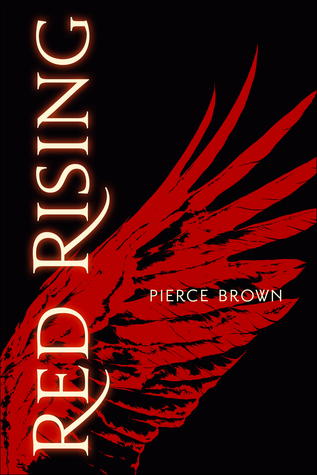
RED RISING by Pierce Brown (2014)

This book is fucking amazing.

I felt so compelled to praise this book after I finished it, that I actually updated my Facebook status for once, with a long-ish paragraph about how awesome this was and how there will no doubt be a bidding war for the rights to make the movie for this. 
And yes, this February, Universal Pictures outbid Sony with a seven-figure sum for Red Rising's screen rights. The guy who directed World War Z, Marc Foster, is apparently steering the helm. 

So Red Rising is actually what it is advertised by its marketers: Ender's Game meets The Hunger Games.

That is LITERALLY what Red Rising is. But just because the novel is unoriginal doesn't make it any less fun. Because it is helluva fun. And anyway, books and films are inspired by iconic works all the time. 

As an obsessive Ender's Game fan, I actually felt like Red Rising was an homage. Clearly, the very young 27 year old Pierce Brown also grew up reading Ender's Game and revering its genius protagonist Ender Wiggin (one of the most iconic characters in all of science fiction). In Red Rising, he combines everything that made Ender's Game good, and everything that made The Hunger Games good, and chucked it in space. 

And I love. Space operas.

So yeah, the book is as they say on Good Reads - "unputtadownable".


THE MARTIAN by Andy Weir (2011)   -  movie coming out in November 2015

Only fedora-wearing science nerds will really like. Although I'm still excited to see the movie. 

This book  revolves around an astronaut named Mark Watney, who is accidentally left behind in a shuttle on Mars during an expedition gone wrong. He has to rely on his extensive knowledge of space, physics, chemistry, engineering and botany to survive until someone on Earth figures out he's still alive.

Even though 104467 people have given it a 5/5 rating on Good Reads, and it has garnered critical reception generally, I would only give it a 1/5. 

First, and to be fair, I never 'studied' science. Sure, I did it all the way up to year 10, as is compulsory, then dropped the science subjects and picked up a few math ones and the rest were humanities based. Think politics and history. So ironically, as a science-fiction lover, I am NOT savvy with the hard science. Thus, this entire book, which is 90% explanation, goes way over my head. No doubt, those with an actual science background will probably love it, and feel some sort of resonance when reading about all the great and ingenious ways Matt devises to make food and communicate with the outer world.

The second point though, is actually its shitty protagonist, which is a fair literary condemnation. See, I don't REALLY mind the whole exposition thing as I keep telling myself - "this is probably the exact reason why people like it" - but then I still couldn't get past Mark Watney.

Watney is one of the biggest douchebags ever, and if I had to work with anyone with a similar personality, I would kill myself. This is the most terrifying thing because according to the book, Mark Watney was chosen specifically for his 'terrific' personality - easygoing, funny, a real bro. HAHAHAHAHA OR THAT'S WHAT ANDY WEIR LIKES TO THINK.

Someone on Good Reads who gave 2 stars actually did a quick background check on author Andy Weir and basically found that he has spent his entire life in academia, studying hard sciences. And while that is very admirable, the impact on his social life/skills - WELL, it's pretty goddamn obvious in the book. There are a crapload of 'hilarious' puns, 'smooth' pick-up artist lines (similar things), 'cool-guy' swearing when actually unnecessary, misogynistic jokes about women, and a heavy sense of obnoxious arrogance that is played off as 'smart funny genius'. The only people who don't agree with me are probably people that buy into that sort of crap.

I HATED MARK WATNEY AND WANTED HIM TO DIE IN THE SHUTTLE SO WE CAN BE FREE OF HIS PENIS JOKES. The end.


ANCILLARY JUSTICE  by Ann Leckie (winner of the 2014 Hugo, Nebula AND Arthur C Clarke awards!! The three biggest prizes in SF)

A totally unexpected thriller. Of mind-blowing creativity. 

I'm only half-way into this but my god. Ancillary Justice is good. It's addictive. It's almost Red Rising addictive. But the thing that makes it better than Red Rising

Originality.

The main character/first person narrator, Breq, isn't human. She's AI. And she's not just an AI controlling one body, like how we usually imagine AI - as an android. She is an AI that controls a humongous warship, and twenty other human bodies (soldiers) at the same time. She IS all of them at the same time. 

*note that she is only referred to by the pronoun 'she' because her human shells/bodies are female. 

And the greatest thing ever? You get to dive inside her mind, and read descriptions of her seeing and feeling the world simultaneously from her different sets of human bodies. And no, not as separate chapters, but as real-time back-and-forth switching which is described within sentences - within paragraphs! And the writing isn't spasmodic at all; instead, it maintains a high quality of consistency throughout the chapters I've read. Overall, the effect is eerie, but incredibly cool, if I have to use the word. 

I haven't finished the book yet, but so far, it remains a mystery why there is only ONE (shell) of her left. 

Ancillary Justice is apparently being picked up by Fox Studios as a TV series. 

Getting Chicken Pox at 21.

*Pardon the months-long hiatus*

You know what's one of the worst things to happen when you're old? 
Alzheimer's. But apart from fucking Alzheimer's, which is legit a scarier thought than the upcoming Blade Runner remake, there's chicken pox. 

By human lifespans, I am not that old. I'm twenty-one,. But in dog years I'm like fifty, and to little kids, I'm a full grown highfalutin job-working white-collar car-driving robot slave. 

With chicken pox. 

And actually, I'm still on my Ls so I don't even qualify as an official adult. I know, it's pathetic.

Anyway, this week has been the worst time to get chicken pox. As one of the vice presidents at my student club, I had spent literally months organising the first university-wide singing competition to ever be held at our university. I was even going to be the MC, alongside a hyper-energetic young male whose Facebook name consists of a heavy oscillation of Xs and Os. He was really fun to work with when we were preparing the speeches, so I was excited to get to do the actual thing on stage. 

And then I got chicken pox two days before the event.
[insert all-caps curse word]

Not only that, I also had to sell off both mine and my boyfriend's law ball tickets and because I'm an emotional weakling, I offered to sell them both at discounted prices even though there was nothing wrong in principle with charging the original price. [inesrt all-caps curse word].

I also rang up my friend to tell her that due to my illness i.e. looking like a walking topography of volcanoes, I couldn't do the other MC job that I promised to do next Thursday, which was of a state-wide scale and open to the public. 

FUCKING SIGH.

So many missed opportunities. The only silver lining in my personal fiasco is that the singing competition apparently went extremely well - thanks to good organising *wink*. Our sponsorship officer was also great, and managed to get Pappa Rich (you know, the restaurant we all go to when we can't make up our minds) to sponsor at least one prize for every single contestant. Pappa Rich were ecstatic with the exposure they received. We had many other sponsors as well, but our President managed to fuck one of their names up in spectacular comedic fashion. He's a good guy.

Before I end up rambling on and on, and possibly starting a new post, you may be wondering why I write so aggressively. In fact, this is me trying to hold back. If I didn't self-censor, there would be a million 'fucks' all over this page right now. I can't help it. I like swearing and it's what I'm really thinking. I am of course not like this in real life (i.e. verbally swearing all the time), but online, I can do almost whatever I want as long as the privacy settings on this blog are what I think I've set them to. 

The thing is, I don't want to blog to create this wholesome picture of myself for the world. This isn't some sort of marketing tool like LinkedIn to create my own personal brand, although I know that these days, that is a must and I have no escape from such a requirement if I intend to forge a successful career in a big city. 

Neither is this blog some sort of picture blog, or foodie blog, or make-up blog, or fashion blog. This is purely, a writing blog. A journal blog. 

It is a way of airing my insecurities, my truest thoughts and feelings - feeling connected to my (very small pool of) readers, and being free from the politically correct standards of Tumblr's 'cis-gender' population who literally can't function without stopping fifteen times mid-conversation to insert a trigger-warning. 

Ciao.

Monday, 20 April 2015

Cyberpunk dreams

I thought this blog would be irrevocably dead, but it turns out my last post was in February of this year, so I guess it's not that bad....

Last night, I was flicking through cyberpunk Tumblrs.
I'm the sort of person who cries when I look at pictures of space. I'm the sort of person who will zoom in on futuristic city landscapes to scour out the beautiful, minute details of the artwork, and then breathe in and out really slowly, imagining that my pupils were dilating to enormous black holes, like I'm on some amazing drug... I will carefully read the Japanese/Chinese neon store signs, my eyes hovering over each character even if I don't recognise it, and count the number of mini people I see roaming the alleyways.

I just fucking love it. I love imagining that I'm there - really there - looking up at these big blue skyscrapers, floating cars and Budweiser blimp ads zooming by. I feel so small, and yet so amazed to be a part of a world so vast, wonderful and ever-changing.

I can't really describe it - it's a sense of excitement, of liberation, of unknowing and adventure. At ground level, there are people of all cultures, complexions and languages, worming their way through the 3am night markets, and hawker food stalls. Ahhh the food stalls, a steamy cornucopia of delicious ethnic foods, another staple of the my cyberpunk fantasies - being able to buy yummy foods at all times of the day.


Usually, I will imagine myself wearing a long camel trench coat and smoking a cigarette, with short hair that just reaches the base of my neck. It has just rained and my hair is wet. Black strands stick to the sides of my face. I'm wearing dark red lipstick, and I have a gun under my trench. I figure I'm probably some sort of stoic, bad-ass hacker ala a William Gibson protagonist. I go to a little Japanese food stall at a busy strip of the market, sit at the small bench they have for patrons, and order an Asahi and a bowl of noodles with fish balls. The stereotypical old Japanese guy with a head band immediately gets to work, while I sit back on the stool, take the cig out of my mouth and watch perfunctorily as a string of smoke escapes my lips and slowly swirls into the steamy night.

The dream cuts to a camera's perspective. It focuses on the back of me, with my trench coat hung over the stool. For a while, it lingers on my unmoving profile. Then it zooms out slowly, and you see just how many other people are out at this time of the night, walking with umbrellas and chattering animatedly in their native language, under a slew of flashing neon lights above.


My most favourite blog of all time: http://metropolisoftomorrow.tumblr.com/

Tuesday, 17 February 2015

Movie: Whiplash

Oh my god. This movie. Is amazing.

In one sentence, Whiplash is about a hopeful 19 year old drummer called Andrew (Miles Teller) who makes it to the top music school in the nation, only to come across Fletcher (JK Simmons), one of the harshest and most fearful teachers ever conceived in the mollycoddled Western world.


The tagline that could have been? See what South Korean schooling looks like on a daily basis, but with white people.


So yes, it's a very simple plotline. With lots of loud yelling, brief but suspenseful pauses in betwixt, shameful drooping of heads, crying, really good jazz music... But holy shit, Miles Teller and JK Simmons are so goddam convincing and ALIVE in this movie that for two hours, I basically time travelled back to my childhood and got to relive all of the shitty experiences I had with my tennis coach dad, aka author of the best-selling Chinese parenting manual 'how to verbally abuse and scar your child for life and never apologise for it'. Hurrah.

Honestly, I loved this movie precisely because it was so fucking accurate. Of course, young and ambitious, I understood everything that was going through Andrew's mind - the burning desire for success fuelled by a debilitating need for acknowledgment and respect. Only by gaining these things will Andrew ever be able to prove his worth to his mentor, and most importantly, to himself. For a lot of kids that are constantly put down by their teachers or parents, self-worth goes hand in hand with academic achievement, or in this case, musical achievement. Obviously, as we have sometimes read in the news, such pressure can lead to devastating consequences - depression, self-harm, suicide. Here, the film deftly confronts this issue in an unexpected, but unsurprising, twist of events.

However, one really outstanding aspect of this movie (of which there are so many) is how deftly it deals with the other side - WHY is it that these teachers/parents push their students so hard? What runs through their mind when they slap their student in the face, calling him or her a useless fucking prick? In this day and age, they must know that such abusive treatment may drive students to their grave. So HOW can they be so callous? So cruel?

JK Simmons, displaying an extraordinary gamut of emotions as the teacher Fletcher, even makes you feel sympathetic for HIM! And his character is truly, a huge douchebag, so this is no small feat. He reveals bit by bit to the audience that he himself never really achieved the greatness he desired. And even as a world renowned music teacher, he longs for the day when he can produce a student who can be the best - to become the next "Charlie Parker" (some famous jazz musician whose teacher once threw a cymbal at his head [sorry I'm such a pleb]). "I've always wanted a Charlie Parker," he even says during a woeful conversation with Andrew at a bar.

Yes, very cliche. Of course, he aims to vicariously enjoy the successes of his students. The acting though, was simply breathtaking. With every enduring second of silence, every blink, every sigh, every convolution of the wrinkles on his face, Fletcher suddenly reveals so much vulnerability - it opens your eyes to how equally scarred and desperate he is... nursing an affliction just as lacerating as Andrew's. You don't see him simply as the villain, or someone to hate, but someone whose ridiculous actions you can actually sympathise with. You know... he's still human after all.

Overall, I still can't believe how brilliant, accurate and gripping this film was.... Watching the young Andrew pump away at his drum set for hours on end until his hands bled, seeing the pool of sweat and tears drenching his face, and even watching him very awkwardly, break up an early relationship with a girl he liked to concentrate on his drumming .... man, I could relate. Because once upon a time, that's how I felt - I was Andrew.

Wednesday, 24 December 2014

Taiwan photos


Shilin Night Market


A street full of Pet stores near my apartment in Daan district


Random roads


Xinyi District 


Inside Taipei 101


Cafe near university


More to come...

Monday, 8 December 2014

#Facebook #universitystudents #FWP

Scrolling down on your Facebook feed as a litany of curse words escape your lips like a ringing alarm bell.

Fuck fuck fuck fuck shit fuck.

Your brows furrow. Your eyes narrow. You ask yourself.

ARE YOU SERIOUS? HE'S FREAKING NINETEEN AND ALREADY INTERNING AT (insert name of huge law firm) IN HONG KONG? WHAT THE FFFFFFFFFFFF -

You scroll down even more.

This girl's just won some international consultancy competition.
That guy's just written his first piece for Foreign Policy.
This person just got accepted to Cambridge for a MBA.
That person just got hired as a part-time sub-editor for Bloomberg News.

You slam your five month old Windows Surface tablet down and heave, simultaneously stressed as fuck, kind of depressed and yet miraculously motivated. You walk to the sink and pour yourself a glass of water, which you down as you return to the sedentary position, your butt adjusting to the moulded contours of the seat.

Fuaaaaaaaaaaaaaaaaaaaaaaaaark You can't help swearing. You think about the baby-faced nineteen year old, with his smarmy smile and expensive suit, one hand conspicuously holding a  champagne glass - a glittering harbinger of this dude's totally premature corporate success - something that you feel has hitherto eluded you. WHY DOES HE HAVE TO BE YOUNGER THAN ME. GODDAMIT. You slam your glass down with slightly excessive force and heave for the millionth time.

Oh my god, I need to step up my game.
I need to get clerkships.
If I don't get clerkships... I'll... I'll apply for one of the Big 4 companies.
Oh my god I DON'T EVEN STUDY COMMERCE.


You open your tablet up, and without better forethought, search up the name of a younger colleague. She comes up as the first result. What the... You click. You click her profile picture. When did she get so freaking hot? THAT. is .such a nice dress are you kidding me jesus effing christ I need that dress arghhhhhhhhhhhhhhhhhhhhahdfwyuiasesfghaoi;wefhawioefh.

Next photo. She's at some sort of hipster club, a generic Mimco clutch in hand, laughing and dancing with friends as luscious locks of blonde hair flail against an ethereal backdrop of drunk teens.
68 likes.
Borderline brain-damaging comments ensue:
Oh my gosh looking that good shouldn't be legal!!! #gorgeous #slaya xoxo
Dayum girl. You can be my bae anyday.
Goddess! *emoticon* *emoticon* *emoticon*
Dat ass

Scroll down. Next photo. She's at some sort of Tanzanian safari park, hugging a tiger cub, her broad smile telling you how much more '#awesome' and '#amazing' (and #parentallysubsidised) her life is compared to yours. You stare into her three hundred dollar Ray Ban shades with uber intensity, but not thinking anything in particular. Just staring.
170 likes.

The next photo is even worse. You thought she was there on vacation. No. She's in Tanzania building schools for needy Tanzanian children, and there she is embraced and surrounded by hundreds of thankful, smiling kids. Oh so compelling, you scoff, third world volunteering opportunities bought by first-world privilege.
240 likes.

You decide you've had enough and log off Facebook, feeling weight on your shoulders.

At that same moment, someone else logs on. A fellow student - a mere acquaintance, perhaps a friend of a friend. He curiously searches up your name and shifts in his seat as he scrolls down your wall, seeing the latest photos of you at a recent government sponsored business forum, you shaking hands with the Minister of Multicultural Affairs, and an ever so smug smile on your face.