WARNING: Graphic content below.
In 1911, an American journalist named Arthur Brisbane said: "Use a picture. It's worth a thousand words."
Although many previous and subsequent writers have undoubtedly written variations of that expression, it was not until the 30s when photojournalism, along with the film industry and an increasing desire for more effective wartime propaganda, flourished and people began to recognise the inherent power of a still visual. After The Great War, photojournalism began to develop into what I and many believe was the most important medium of the next few decades.
Between the 30s and the 70s, often regarded as the golden age of photojournalism, an incessant string of wars provided more than ample opportunity for photographers to capture the worst of humanity. The blood, the guts, the smiling faces of future war criminals, the agonising tears of dying civilians. For the first time, people sitting in their living rooms, sipping tea and reading the newspaper, could see what was happening miles away on a battlefield. They didn't just read words about this and that event - they could see the human faces behind it, and that made the brutality of what was happening around them extremely hard to ignore.
Ultimately, there were photos which left such shocking after-tastes in people's mouths that it eventually changed the course of history - rousing members of the public into protest, forcing governments to intervene in foreign wars and even playing a large part in ending the war itself.
Below, I have compiled a list of 10 photos that I believe did just that - photos so horrific and cut so deeply into people's memories that they became rallying points for change and reform, or at least - indelible icons of human cruelty and suffering.
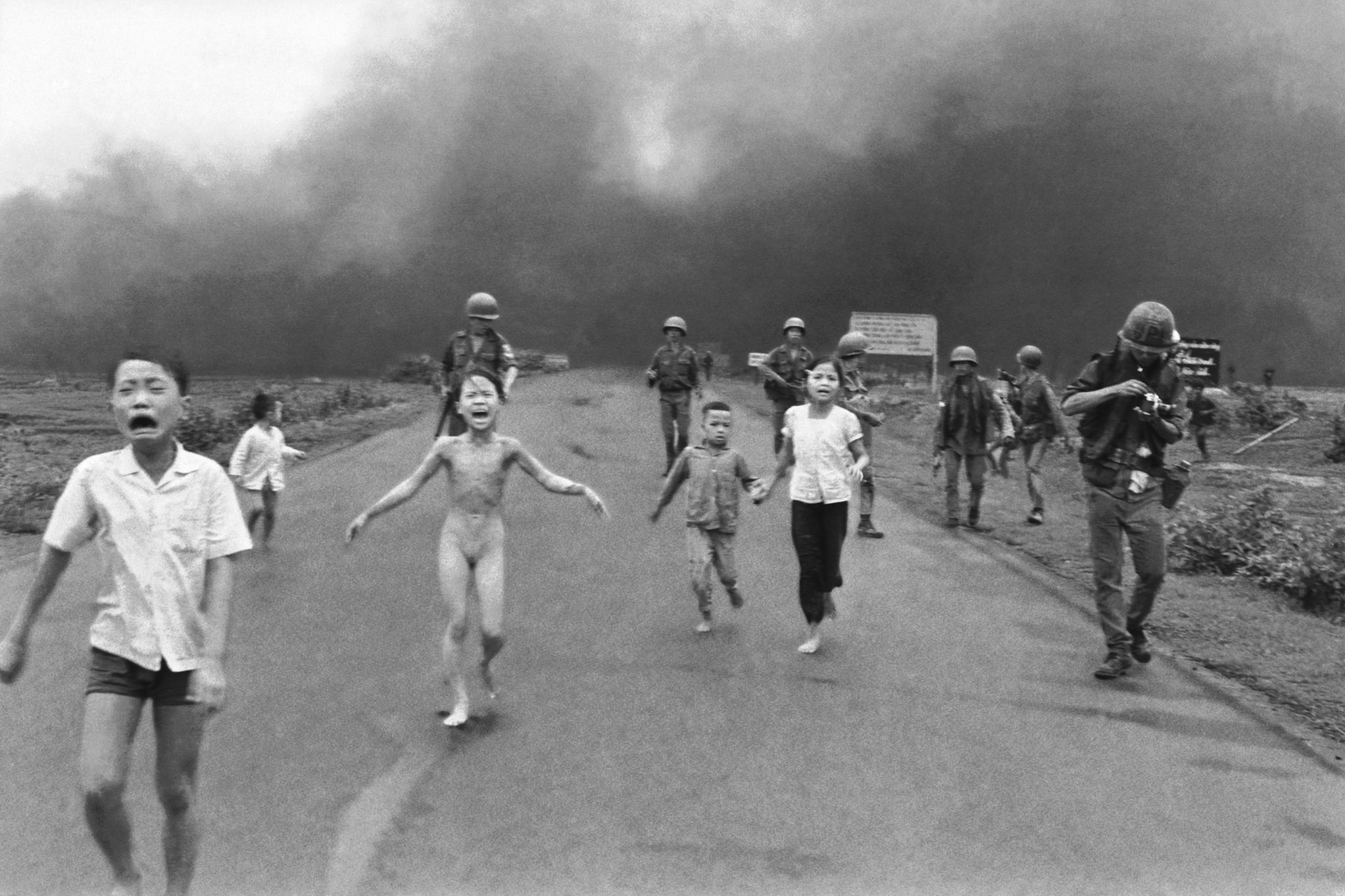
1. Vietnamese Girl Running From Napalm Attack, 1972
 |
| Taken by Huyn Cong (Nick) Ut in 1972 near the South Vietnamese village of Ayod |
Many people say photojournalism reached its apogee in the 60s and 70s when the Vietnam War became the first war to 'play out in people's living rooms'. Televisions had just become popular and the US government, partly wanting to rouse public support for their own soldiers fighting in Vietnam, and partly due to inexperience with such new mediums, had pretty much allowed full and unfettered access for journalists to cover whatever they wanted on the ground.
But as the war raged on, this decision backfired enormously. More and more photos popped up in the media depicting the squalid deaths of Vietnamese civilians - collateral damage in a war that was not only going no where, but getting worse.
Most shockingly, rumours about US soldiers committing atrocities against innocent men, women and children were verified when photos surfaced of the notorious 1968 My Lai Massacre (if there's anything I remembered studying about the Vietnam War in high school, it was that); My Lai - a village that was only inhabited by the elderly, women and children, was nevertheless burnt to the ground by a company of US soldiers. Women were raped. Children were slaughtered. Bear in mind - we are talking about atrocities carried out by Americans.
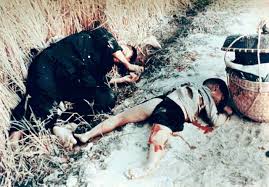 |
| The My Lai Massacre 1968 |
Soon, pictures like the above made front page news in America. But in 1972, Kevin Ut's 'unbelievable' photo of a nine year old Vietnamese girl named Kim Phuc, screaming in agony (saying "It's too hot! Give me water!") and running away from Napalm bombs - her clothes having eviscerated upon contact by the US developed chemical weapon - the American public had had enough. While anti-War sentiment had been building up, it now reached a climax. President Nixon, who initially believed the photo was phony, had to answer the furious calls from hundreds of thousands of protesters around the country who were calling their own soldiers 'rapists' and 'baby-killers'. Some soldiers who came back were apparently spat upon and some had to sneak into the country at night.
Eventually, Nixon had no choice but to begin pulling out large numbers of troops. After two decades, the war finally came to an end, albeit ignominiously, in 1975.
2. The Brutality of European Colonialism in Congo, 1904
 |
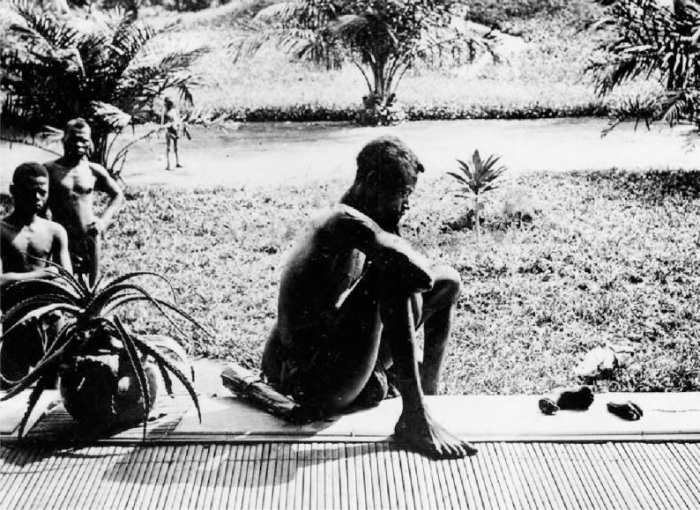
| Taken by Alice Harris in May 1904 in Congo |
This photo was taken in 1904 by Alice Harris, a missionary who was working in Belgian Congo. At first, it may be hard to make out what exactly is being depicted in the photo, as it was for me, but next to Nsala Wala is his daughter's hand and foot, received in a mailed package from Belgian authorities.
Both his wife and daughter had been killed and mutilated by Belgian police in what was an accepted practice to deter theft. Alice and her husband were so appalled, they sent the photo back to Britain with the caption: “The photograph is most telling, and as a slide will rouse any audience to an outburst of rage.”
They later went on tours in other countries, giving lectures about atrocities in Congo and denouncing Belgian treatment of the Congolese. Remember this picture and remember its significance - it launched the first successful human rights campaign in history. It appeared widely in books and papers and eventually pressured King Leopold of Belgium to relinquish the colony in 1908.
3. The Famine in Sudan: Vulture Stalking a Child, 1993
 |
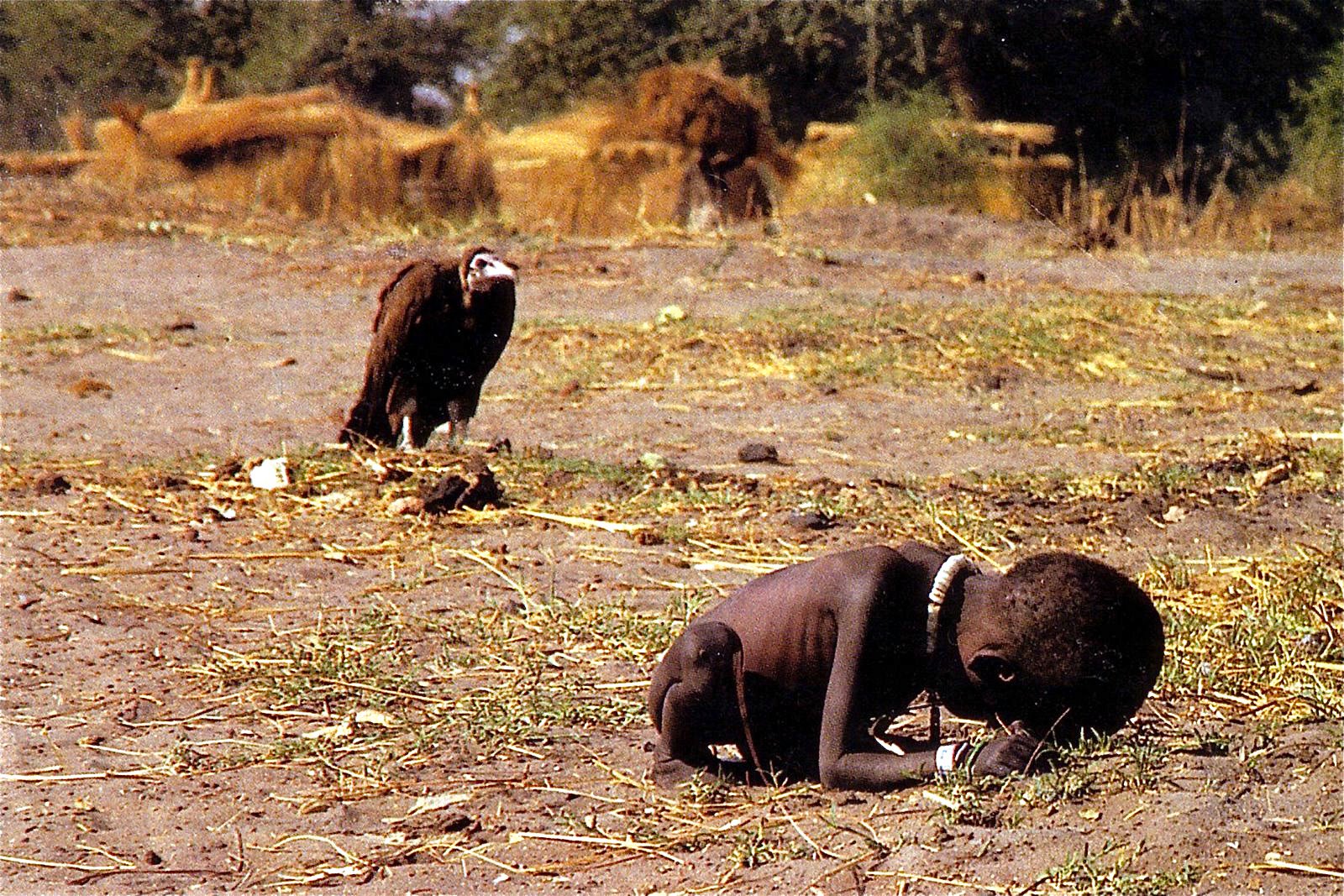
| Kevin Carter's 1993 photograph of an emaciated Sudanese toddler being stalked by a vulture |
Personally, this was THE photo. I'm not kidding when I say it, well, changed my life.
It was the start of year 11 when I came across this photo. Since year 7, after overcoming a very dark period, I had decided that I was going to dedicate my life to something that would make a difference.
But when I saw this picture, I had never felt so strong about my convictions. I was also shocked at myself. I was sitting in front of my laptop, having just read an extremely horrifying story about rape in Congo, and then was led to another link about Kevin Carter's 1993 Pulitzer prize winning photograph. It was of a Sudanese toddler so emaciated and on the brink of death, that it had been abandoned in an open field, vulnerable to....A VULTURE?!?!
After being published by The New York Times and many other agencies, an unprecedented number of people rung them up to ask about the fate of the child, some also condemning Carter for not rescuing her. But in all, the photo did what it was meant to do - cause a reaction.
In the same year, Carter won a Pulitzer for the photograph. The following year, he committed suicide.
It was just so fucking perverse. I had just been bombarded with 1. a really shocking story about women getting raped so seriously they had developed fistulas and 2. a really shocking picture of a vulture waiting for a little kid to die and then eat. And the photographer so affected by it and the reactions of the public that he killed himself.
God. My mind was reeling with thoughts like: I've been alive on this earth for 15 years, how could I not even have heard of Kevin Carter, the Sudanese famine or the brutal rapes of Congolese women?
It didn't matter that I was freaking thousands of miles away. The fact that I was living on the same planet as these people and didn't know a freaking shit about what they were going through really boggled my mind.
And then of course, the next day, I had to go and inform everyone in my high school politics class like an obnoxious activist. 'Guys, guys! Did you know that....'
And I will NEVER EVER forget this, but a girl in my class told me to not talk about it anymore because it was... 'gross'. And she didn't want to hear about 'gross' things.
I was like.
Holee. Shit.
I was so pissed off.
4. Genocide: The Killing of Bosnian Muslims, 1995
 |
Taken by Darko Badic during the massacre of Bosnian Muslims 1995
(1995, that was after I was born, just thinking about that makes me feel....bleh) |
In a few days in July 1995, Bosnian Serb
forces massacred around 8,000 Bosnian Muslim men and boys in the town of
Srebrenica, which was supposedly under the UN aegis. We stood idly outside, our
rhetoric changed from ‘Never again’ to ‘Once More’.
Darko Bandic, a freelance Croat photographer working for AP,
recalled the above photograph he took near the annihilated town:
I had arrived at this massive makeshift
refugee camp in Tuzla early in the morning, around 5.30am. Tens of thousands of
distraught women and children had poured into the camp the previous day.Just as I was about to enter the camp, two or
three young girls told me they had spotted a woman hanging from a tree in the
woods. They took me to her. I was actually a bit confused. I didn’t know
exactly what to do. From the direction I was walking I could see her face, but
obviously I didn’t want to shoot that. I shot just a couple of frames, then
went back to the UN guard. I remember he was a Swedish soldier and I told him
what I had seen. He said: ‘For now, let’s take care of the ones who are alive.’
I saw so many really awful things in Bosnia’s
war, that was just yet another of them. I did wonder what horrific things must
have happened to her to drive herself to take her own life. But I never found
out. I never even knew her name until a year later.”
Her name was Ferida Osmanovic and her photo soon appeared on
front pages all over the world. It was a metaphor for the Unknown Victim of the
Balkan wars: faceless, defenseless, humiliated.
At their Oval Office meeting,
Vice President Al Gore told President Clinton, “My 21-year-old daughter asked
about this picture. What am I supposed to tell her? Why is this happening and
we’re not doing anything? My daughter is surprised the world is allowing this
to happen. I am too.” His outrage was shared by many UN officials, NATO and US
Army’s top brass.
President Clinton, whose initial comments on Srebrenica were
lawyerly (‘the fall of Srebrenica undermined the UN’s peacekeeping mission’),
was pushed towards an intervention by Gore. On the Capitol Hill, Senator Diane
Feinstein was equally vehement; in a memorable speech, she used the photo to
underline the plight of raped and murdered civilians in the war zone.
By July, the UN had given its military forces the authority to
request airstrikes without consulting civilian UN officials. A comprehensive
air support for other safe zones and retaliatory air strikes by NATO were
launched against the Serbs. The bombing campaign finally brought the Serbs to
the negotiating table in November 1995, when the Dayton Accords put an end to
three and a half-year long Bosnian War.
[For details of Ferdia's surviving children, the Guardian
story here.]*
The most striking thing about the photo — and Srebrenica
massacre — was that it happened in 1995, exactly a year after the Rwandan
genocide. My memory of both events is vague, but I saw them on CNN daily
growing up. In fact, they were amongst my first memories of the world outside
my family. They have shaped who I am today. No one — but especially no children
— should see similar horrors unfolding, firsthand or otherwise.
Auschwitz. Srebrenica. Rwanda. Congo. Syria.
The list goes on.
5. The Face of Emmett Till - the Civil Rights Movement, 1955
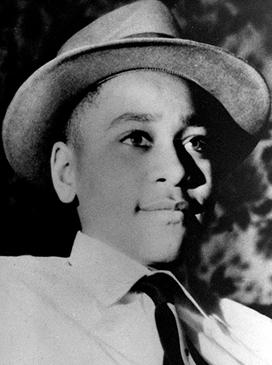
This was the face of 14 year old Emmett Till before his brutal bashing and murder by two white men in Mississippi, August 1955. The picture below, shows his face after:
 |
| His mother specifically requested an open casket funeral so the world would be able to see the truth |
Again, this is a case I learnt in high school. I don't remember the teacher ever showing us the latter photograph, but we definitely came across it during online research.
Emmett Till was 14 years old when he apparently whistled at a white woman as he walked out of a small grocery shop with some candy he had bought with his friends. Nobody knows what that whistle really meant. A greeting? A goodbye? A leery wolf whistle? Whatever it was, Carolyn Bryant had told her husband about the 'incident', and he found it deeply offensive.
Since I can't be stuffed typing, the facts of the case, as outlined on Wiki:
Several nights later, Bryant's husband Roy and his half-brother J. W. Milam arrived at Till's great-uncle's house where they took Till, transported him to a barn, beat him and gouged out one of his eyes, before shooting him through the head and disposing of his body in the Tallahatchie River, weighting it with a 70-pound (32 kg) cotton gin fan tied around his neck with barbed wire. His body was discovered and retrieved from the river three days later.
The trial of Roy Bryant and J. W. Milam garnered huge attention from the press and you won't want to believe it - but there were newspapers (and almost all Mississippians) that defended them by exaggerating Carolyn's beauty and outright claiming that the whistle was indeed a wolf whistle (sexual connotations and all). But most egregious of all, an all white, all male jury acquitted the both of them:
Bryant and Milam were acquitted of Till's kidnapping and murder, but only months later, in a magazine interview, protected against double jeopardy, they admitted to killing him.
The case gave the Civil Rights Movement a huge push in momentum - so much coverage was given to Emmett Till's case that Mississippi became defined by his death. All around the nation, civic action groups were being formed to raise awareness of African American civil rights.
Three months later on December 1, a woman named Rosa Parks refused to give up her bus seat for a white man. And the rest is history...
Controversy:
Little Wayne, an African-American rapper who doesn't know anything about US history, makes a dick move and references Emmett Till in a song, July 2013, forced to apologise by Emmett Till's family
WORTHY MENTION:
Because I'm tired, I'm going to reblog:
Dead US Soldiers dragged through Mogadishu (capital of Somalia), US pulls out, this failed campaign becomes the basis for Hollywood movie Black Hawk Down + also, the US doesn't intervene in the Rwanda genocide 1994 for fear that the same thing would happen
It was a media war that the United States lost in Somalia, ironic since its involvement was forced by the pictures of famine-stricken people there. In one of the clearest and earliest examples of the CNN effect, the war was repeatedly dogged by the dozens of press photographers. It is an anticipating media, not snipers or enemy combatants, that greeted the U.S landing forces in Mogadishu in December 9th 1992.
For a war that began with memorable images, it is both fitting and ironic that it ended because of another set of dramatic images. The photos taken by Canadian photographer Paul Watson, of a dead American soldier being dragged through the streets of Mogadishu spelled the beginning of the end for U.S.-U.N. peacekeeping force. Domestic opinion turned hostile as horrified TV viewers watched images of the bloodshed—-including this Pulitzer-prize winning footage of Somali warlord Mohammed Aideed’s supporters dragging the body of U.S. Staff Sgt. William David Cleveland through the streets of Mogadishu, cheering. President Clinton immediately abandoned the pursuit of Aideed, the mission that cost Cleveland his life and gave the order for all American soldiers to withdraw from Somalia by March 31, 1994. Other Western nations followed suit.
When the last U.N. peacekeepers left in 1995, ending a mission that had cost more than $2 billion, Mogadishu still lacked a functioning government. The battle deaths, and the harrowing images prompted lingering U.S. reluctance to get involved in Africa’s crises, including the following year’s genocide in Rwanda. In 1996, Osama bin Laden cited the incident as proof that the U.S. was unable to stomach casualties: when “one American was dragged in the streets of Mogadishu you left; the extent of your impotence and weaknesses became very clear.” Never before or since had a photo altered a nation’s political destinies so much so.